
Explanation for why we don't see two-foot-long dragonflies anymore fails
New research challenges long-held beliefs about giant insects.
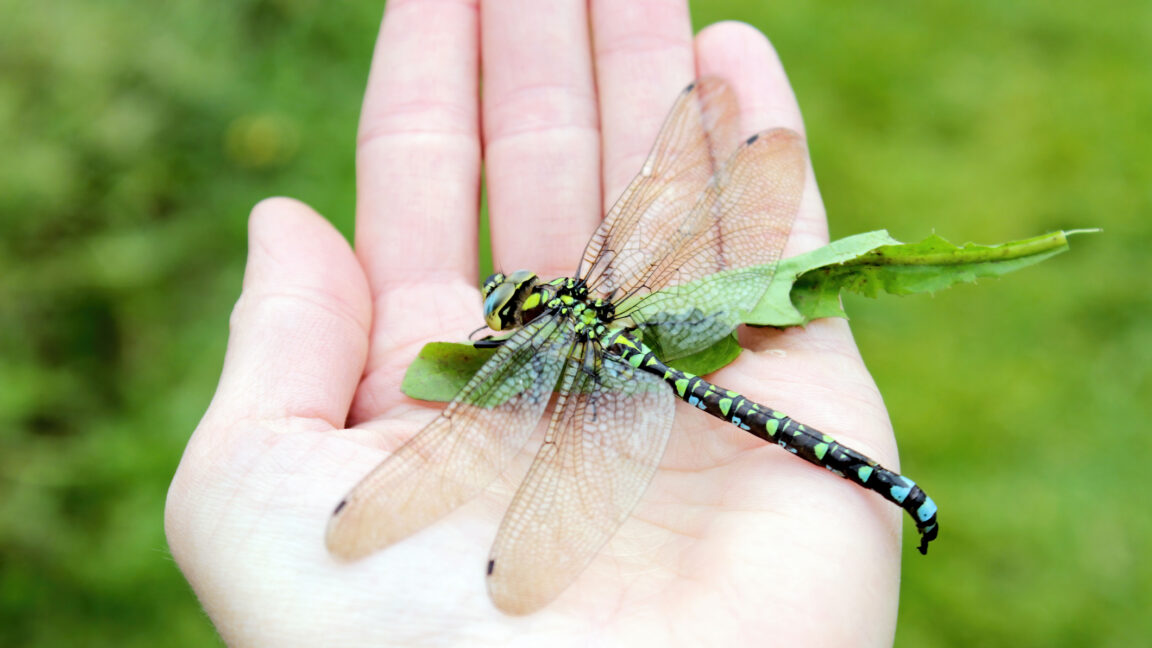
A recent study led by Edward Snelling challenges the long-standing oxygen constraint hypothesis, which claimed that giant insects like Meganeuropsis permiana could not survive due to declining atmospheric oxygen levels. The research found no significant increase in tracheolar volume density with insect size, suggesting that other factors, such as predation by birds and bats, may have played a crucial role in limiting insect size evolution.
Key Takeaways
- 1.
The oxygen constraint hypothesis, suggesting giant insects needed high oxygen levels, is proven incorrect.
- 2.
Research on 44 insect species shows tracheolar volume density does not significantly increase with size.
- 3.
Predation by aerial vertebrates may have limited the evolution of larger insects.
Get your personalized feed
Trace groups the biggest stories, videos, and discussions into one feed so you can stay current without scanning ten tabs.
Try Trace free