
Break It To Make It: How Fracturing Sculpts Tissues and Organs
Key Takeaways
Fracturing in developing tissues is a constructive process, not a destructive one.
Mechanical forces, including hydraulic fracturing, play a crucial role in shaping organs.
The heart's development involves fractures that facilitate the formation of essential structures.
Fracturing as a mechanism is likely more widespread across species than previously thought.
Understanding these processes can reshape our views on evolution and biological development.
The Surprising Role of Fractures in Embryonic Development
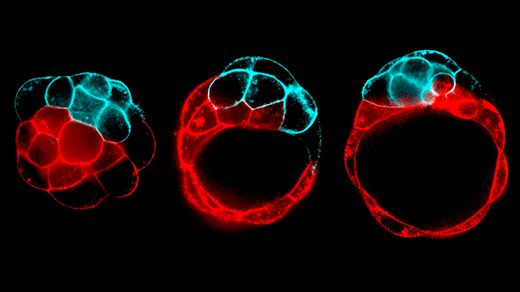
Imagine a developing mouse embryo just before it implants in the womb. In a moment of seemingly chaotic disarray, hundreds of tiny fluid-filled bubbles form between its cells, creating fractures that ultimately reshape the embryo into a blastocyst. This process isn't destructive; it's a carefully orchestrated event that allows the embryo to grow. Hervé Turlier, a physicist, notes that these fractures are temporary and constructive, fundamentally altering the structure of the developing tissue.
Mechanics of Fracturing in Living Tissues
For years, scientists have understood that physical forces shape tissues. However, the idea that fracturing could be a deliberate mechanism in biological development is relatively new. As biophysicists and developmental biologists collaborate, they are uncovering how forces that seem destructive can actually be essential for forming complex structures. This is a significant shift in understanding how organisms are built, revealing a dynamic interplay between biology and physics.
Hydraulic Fracturing: A Biological Analogy
The concept of hydraulic fracturing, where fluids under pressure cause materials to break apart, provides a fascinating analogy for understanding tissue development. In a study, researchers found that when they stretched a layer of cells on a gel, it didn’t break until the tension was released, allowing fluid to push between the cells and create fractures. This insight led to the realization that similar processes occur in living tissues, where fluid dynamics play a crucial role in shaping structures.
Fractures in Heart Development: A Case Study
The heart is the first organ to form in vertebrates and is subject to immense mechanical forces. Rashmi Priya's research on zebra fish hearts revealed that as the heart beats, it creates fractures in the surrounding cardiac jelly. These fractures are not merely destructive; they facilitate the formation of trabeculae, muscular strands essential for heart function. By manipulating the heart rate, Priya's team demonstrated that the number of fractures directly correlates with the heart's mechanical strain, showcasing how physics governs biological development.
The Broader Implications of Fracturing in Evolution
The recognition that fracturing can be a constructive force in development has broader implications for our understanding of evolution. This phenomenon is not limited to mouse embryos or zebra fish hearts; it appears across various species, suggesting that fracturing is a fundamental mechanism in shaping organisms. As researchers continue to explore this concept, they may uncover even more examples of how breaking can lead to building, reshaping our understanding of biological development and evolution.
Why it matters
This research challenges traditional views on growth and development, showing that breaking things can be essential for building complex structures. It highlights the intricate relationship between physics and biology, offering new insights into how life evolves.
Get your personalized feed
Trace curates the best articles, videos, and discussions based on your interests and role. Stop doom-scrolling, start learning.
Try Trace free