
The Biophysical World Inside a Jam-Packed Cell
Key Takeaways
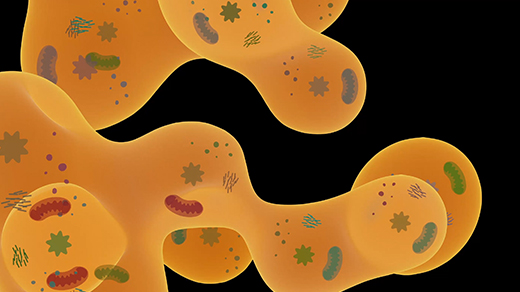
Cells are more crowded and dynamic than previously thought, resembling a bustling nightclub rather than a calm factory.
Cytoplasmic crowding is crucial for cellular functions, with ribosomes making up 30% to 40% of the cytoplasm's volume.
Liam Holt's GEMs reveal how nutrient levels influence internal crowding, with mTORC1 acting as a regulatory control.
In multicellular organisms, cytoplasm can be 50 times more crowded than in cultured cells, complicating molecular interactions.
Understanding crowding can help distinguish healthy cells from cancerous ones, potentially leading to better treatments.
Introduction to the Crowded Cell Environment
Imagine a cell not as a serene factory but as a bustling nightclub. Recent research reveals that the cytoplasm of cells is far more crowded and dynamic than traditional textbook images suggest. This crowdedness is crucial for cellular function, influencing how molecules interact and react. Scientists have begun to explore this chaotic environment, uncovering how cells regulate their internal crowdedness to optimize biochemical reactions essential for life.
The Importance of Cytoplasmic Crowding
Cells operate on a delicate balance of crowding — too little and molecules drift aimlessly, too much and they become immobilized. This phenomenon, known as the Goldilocks principle, is vital for processes like metabolism and protein synthesis. Researchers have found that ribosomes, which constitute 30% to 40% of the cytoplasm's volume, play a key role in maintaining this balance. If cells are too crowded, vital processes can stall, leading to dysfunction.
Liam Holt's Groundbreaking Research with GEMs
Liam Holt's innovative approach using genetically encoded multimeric nanoparticles (GEMs) has transformed our understanding of cellular crowding. By tagging these nanoparticles with fluorescent markers, he tracked their movement within cells, revealing that nutrient levels directly influence cytoplasmic density. His work suggests that the nutrient-sensing protein mTORC1 acts as a "dynamic control knob" for regulating this crowdedness, allowing cells to adapt their internal environment based on growth conditions.
Crowding in Multicellular Organisms vs. Cultured Cells
The research took an exciting turn when G.W. Gant Luxton applied Holt's findings to living multicellular organisms, specifically using transparent worms. The results were astonishing: the cytoplasm in these worms was found to be 50 times more crowded with ribosomes than in cultured cells. This thick environment, likened to "strawberry jam," raises questions about how molecules can effectively encounter one another to facilitate necessary reactions.
The Implications for Understanding Diseases Like Cancer
Understanding cytoplasmic crowding is not just an academic exercise; it has real-world implications, especially in cancer research. Cancer cells often exhibit altered mechanical properties due to increased crowding, which can affect their behavior and treatment responses. By studying how crowding varies across different tissues, researchers hope to identify unique biophysical signatures that distinguish healthy cells from diseased ones.
The Future of Biophysical Research in Cells
This emerging field is rapidly evolving, with researchers now exploring how different cell types manage crowding. The findings suggest that there is no one-size-fits-all optimal level of crowding; instead, cells fine-tune their internal environments based on specific needs. As scientists continue to investigate these dynamics, they are likely to uncover new insights into cellular health, disease mechanisms, and potential therapeutic targets.
Why it matters
This research reshapes our understanding of cellular biology, highlighting the intricate balance cells maintain to function effectively. It opens new avenues for studying diseases and developing targeted therapies, making it crucial for professionals in biology and medicine.
Get your personalized feed
Trace curates the best articles, videos, and discussions based on your interests and role. Stop doom-scrolling, start learning.
Try Trace free